Is it normal for kids' teeth to be crooked? Often, yes. Many children's teeth come in a little crooked or crowded, and some settle as the jaws grow. But crooked teeth can sometimes point to a jaw or bite issue, so it helps to know what's normal and when to have a specialist take a look.
Parents are often excited to see new teeth, so it can be worrying when they don't come in straight. Woodhill Dental Specialties offers both pediatric dentistry and orthodontics, so we can help you tell when crooked teeth are normal and when they need attention.
Often, yes. Baby teeth usually come in with small spaces between them, and that's a good sign. Those spaces leave room for the larger permanent teeth. Your child has 20 baby teeth but will have 32 adult teeth, so the jaws need to grow to make room.
Some crooked or crowded teeth are common when permanent teeth erupt. The lower front teeth often come in a little twisted. Upper front teeth may have a gap between them for a while, sometimes called the "ugly duckling" stage, which often closes as the neighboring teeth come in. Crowded baby teeth are less typical and can be an early sign that the jaw may not have enough room for the permanent teeth, so it's worth mentioning to your dentist.


Several factors can cause teeth to come in crooked:
These factors can affect how teeth erupt and how the teeth and jaws keep developing. Some are habits you can work on, which may help support jaw development, though it can't guarantee straighter teeth. For more, see why kids' teeth shift after erupting.
Teeth can take months or even years to settle. See an orthodontist sooner if you notice:
These can be signs your child will need treatment with braces or clear aligners, especially if they get worse or the permanent teeth come in crooked. The best next step is an orthodontic evaluation. Our guide on how to know if or when your child needs braces can help.
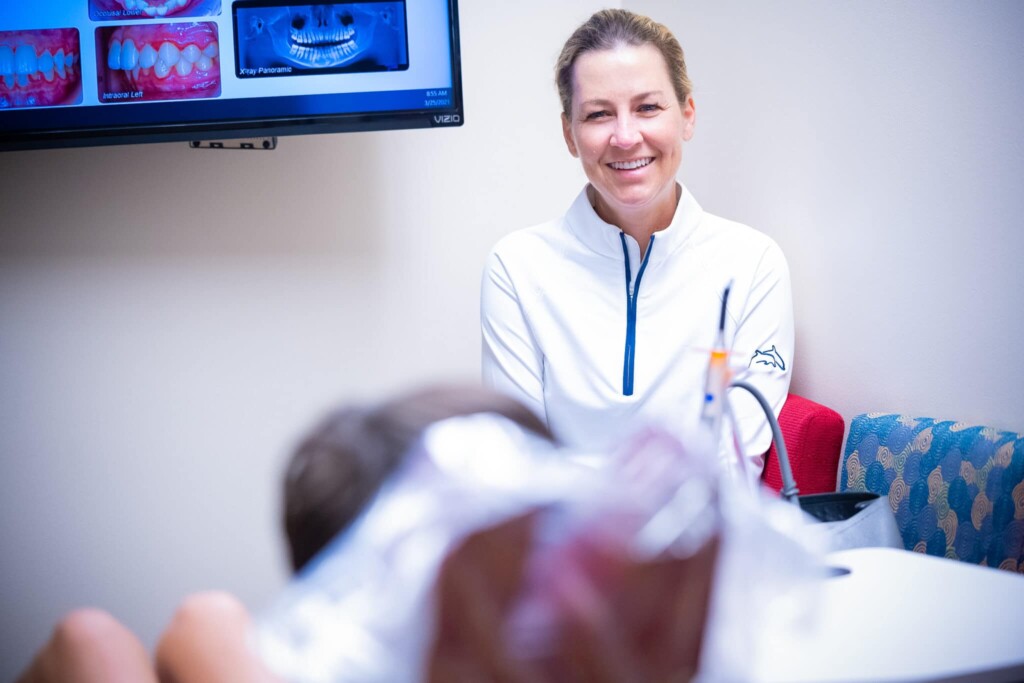
Straight teeth don't always mean a healthy bite. A bad bite or narrow jaw is harder for a parent to spot, which is why the American Association of Orthodontists recommends a first evaluation by age 7. Most children don't get braces until ages 11 to 13, but by age 7 they usually have a mix of baby and permanent teeth, and the first adult teeth are coming in. That lets us use X-rays and photos to see how the adult teeth are developing and whether there's enough room for them. Baby teeth can look straight even when there isn't much space left in the jaw. Learn more about the best age for braces. With pediatric dentists and orthodontists under one roof, we can watch your child's teeth from their first tooth and tell you when it's time for an evaluation.
No. We recommend treatment only when needed. After your child's exam, we'll tell you whether treatment should start now, can wait for the best time, or isn't needed.
In some cases, an early appliance, such as a palate expander, can guide jaw growth and create room for permanent teeth. Some children do best with two-phase treatment: early guidance first, then braces or clear aligners later. Early treatment doesn't always eliminate the need for braces, but it can make later treatment easier.
Your first orthodontic visit is a complimentary, one-hour consultation with an exam, X-rays, and photos, and there's no obligation to start treatment.
Will crooked teeth straighten out on their own? Some mild issues, like the gap between upper front teeth during the "ugly duckling" stage, often improve as permanent teeth come in. Crowding and bite problems usually don't fully correct themselves, so schedule an evaluation once adult teeth start erupting.
Is thumb sucking a concern if my child already stopped? Many children stop on their own between ages 2 and 4. Habits that continue longer, especially once permanent teeth start coming in, are more likely to affect the bite and jaw. Even if your child has stopped, a checkup can confirm their teeth and bite are developing well.
Does mouth breathing alone mean my child needs braces? Not necessarily. Mouth breathing can also point to issues like swollen tonsils, adenoids, or sinus problems, so we may recommend an ear, nose, and throat specialist along with an orthodontic evaluation.
Crooked teeth don't always mean braces are in your child's future, but teeth that don't settle or get more crooked over time are a good reason to see an orthodontist.
If you need a pediatric dentist, an orthodontist, or both, schedule an appointment at our Dallas or Rockwall, TX, office. We take pride in building long-term relationships with our patients.
 This site’s strategy, design, photo & video were created by the marginally-above-average folks @ Clear Partnering Group.