Your child has been seeing a pediatric dentist for years, but now they need to see an orthodontist. So does that mean they won’t need that pediatric dentist anymore? Your child will still need their dentist, but now they will have a dentist and orthodontist who can work together to support their oral health.
What is the difference between a pediatric dentist and an orthodontist, and why does your child need both? Not all children need both, but many in the U.S. will need some form of orthodontic treatment.
Woodhill Dental Specialties offers pediatric dentistry and orthodontics all under one roof. Our doctors can care for all your child’s dental needs, whether that’s routine cleanings or orthodontic treatment. They also work together to support your child’s oral health and smile development.
It may all seem a bit confusing — dentist vs. pediatric dentist vs. orthodontist. All three start out as dentists. The difference is in the training that happens afterward.
All three begin with general dentistry training in dental school. This provides the foundational skills you would expect from a dentist, including preventive care, treating cavities, placing restorations, and managing gum health.
After dental school, some dentists pursue additional training to specialize in areas such as pediatric dentistry or orthodontics.
Those who specialize in pediatric dentistry complete additional training focused on the unique needs of children. This includes caring for both baby teeth and developing permanent teeth, as well as helping children feel comfortable during dental visits.
For us, pediatric dentistry is about supporting your child’s oral health while helping them feel at ease during their visits.
Like a pediatric dentist, an orthodontist begins with dental school and then completes additional specialized training.
Orthodontists focus on the alignment of teeth and jaws. They are trained to guide tooth movement and address bite concerns using treatments such as braces or clear aligners.
The additional training pediatric dentists and orthodontists complete helps them understand how teeth and jaws develop over time and how to support healthy outcomes as your child grows.isk of enamel decalcification around brackets.

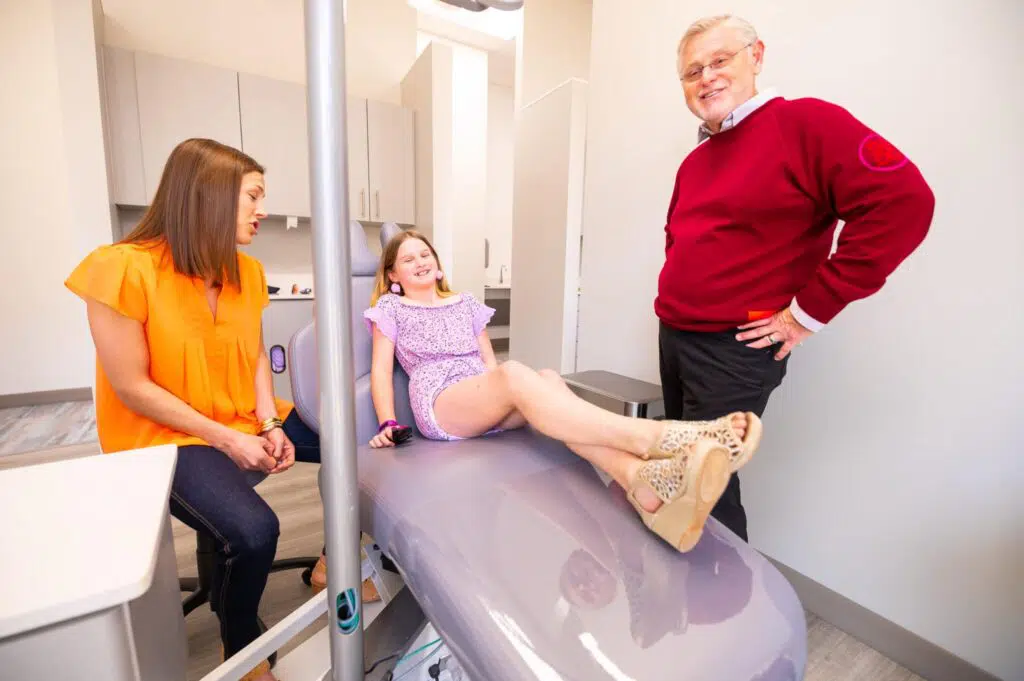

The American Academy of Pediatric Dentistry recommends that children see a dentist by their first birthday or when their first tooth comes in. It might feel a little early, but there’s a good reason for it.
These first visits are less about treatment and more about getting your child comfortable. It gives them a chance to get used to the sights and sounds of the dental office in a low-pressure way, which can make a big difference as they get older.
It’s also a helpful time for you as a parent. Your pediatric dentist can walk you through things like brushing, teething, fluoride, and what’s normal as your child’s teeth start coming in. If there are any early concerns, they can catch them early and guide you on next steps.
From there, regular visits help keep things on track as your child grows. It becomes part of their routine, just like any other checkup, and helps set the tone for a lifetime of healthy habits.
The American Association of Orthodontists recommends that children have an orthodontic evaluation by age 7. At this stage, many children have a mix of baby teeth and permanent teeth.
The remaining permanent teeth are developing in the jaws and will gradually erupt. With the help of dental X-rays and imaging, an orthodontist can evaluate how these teeth are positioned and whether there may be spacing, alignment, or growth concerns.
Early evaluation allows orthodontists to monitor development and, when appropriate, recommend treatment at the right time.
In some cases, early orthodontic care may help guide jaw development or create space for incoming teeth. This is sometimes referred to as a two-phase treatment.
The first phase may occur around ages 9–10 and can involve appliances that help guide jaw growth and tooth positioning. The second phase may involve braces or aligners during the early teen years.
Not all children will need early treatment. Your orthodontist can recommend the next steps based on your child’s individual needs.

The American Academy of Pediatric Dentistry recommends that children continue to see a pediatric dentist through their teen years. Some patients transition to a general dentist earlier, depending on their needs and comfort level.
Children should begin seeing a pediatric dentist when the first tooth erupts or by their first birthday. An orthodontic evaluation is often recommended by age 7.
In many cases, orthodontists and pediatric dentists coordinate care, including sharing relevant information and observations to support your child’s oral health.
In many cases, both play important roles in your child’s care. A pediatric dentist focuses on maintaining healthy teeth and gums, while an orthodontist focuses on alignment and bite.

Woodhill Dental Specialties is unique in that we offer both pediatric dentistry and orthodontics in one office, which makes it easier and more convenient for both of you. It’s easy for our doctors to work together, and both can examine your child during the same appointment if needed.
Not only do you get exceptional treatment from our friendly, experienced doctors, but you also get peace of mind knowing your child is in good hands, without having to run around the Dallas metro area from one dentist's office to another.
If you’re ready for exceptional pediatric dentistry and orthodontics all under one roof, schedule an appointment with Woodhill Dental Specialties today!
 This site’s strategy, design, photo & video were created by the marginally-above-average folks @ Clear Partnering Group.