Why does orthodontic relapse happen in kids, and how do you stop it? Your child’s teeth may move once their braces or clear aligners are removed for several reasons. It’s why it’s so important for your child to wear their retainers as prescribed.
Woodhill Dental Services treats children of all ages, including those whose teeth have moved after treatment. Have your child’s teeth moved after treatment? It can be fixed more easily than you think.
What do we mean by orthodontic relapse, and what causes it? Orthodontic relapse refers to teeth moving after orthodontic treatment with braces or clear aligners. Let’s explore why teeth move after orthodontics.
Why does this happen? Teeth aren’t locked into the jaw. Instead, they are held there by periodontal ligaments. Those ligaments loosen so braces or clear aligners can move the teeth. Once those braces or clear aligners come off, the ligaments take time to tighten up again. Instead, they may pull the teeth back to their old locations.
This is why wearing retainers is so important. It holds the teeth in place while the ligaments tighten up again.
Also, a child’s jaw is still developing and growing, which may cause the teeth to shift after braces in kids.
Woodhill Dental Specialties offers two-phase treatment for kids, so that we can guide jaw development to make braces or clear aligner treatment easier later on, or even less necessary. The first phase, usually around 9-10 years old, involves using orthodontic appliances to reshape the jaws. The second phase usually happens a few years later, between 11-14 years old.
For example, children with a narrow upper jaw may get a palate expander to widen the jaw as it grows and develops. This prevents tooth crowding, which would have to be fixed with braces or clear aligners later.
Other reasons for teeth shifting:
Yes, teeth can shift if there is a problem with the retainers fitting properly. If they aren’t worn long enough in the beginning (20-22 hours a day), the teeth can shift. The first 3-6 months will be the most important to wear the retainers most of the time, removing them only for eating, brushing, and flossing teeth.
They won’t shift overnight, so if retainers don’t fit properly, let us know right away, and we can bring you in to adjust them.
You can get braces again, but if the shifting is minor, clear aligners may be enough to do the trick! We can evaluate your child’s teeth and let you know. Clear aligners may be a quicker, easier method to repair their bite than using braces again.

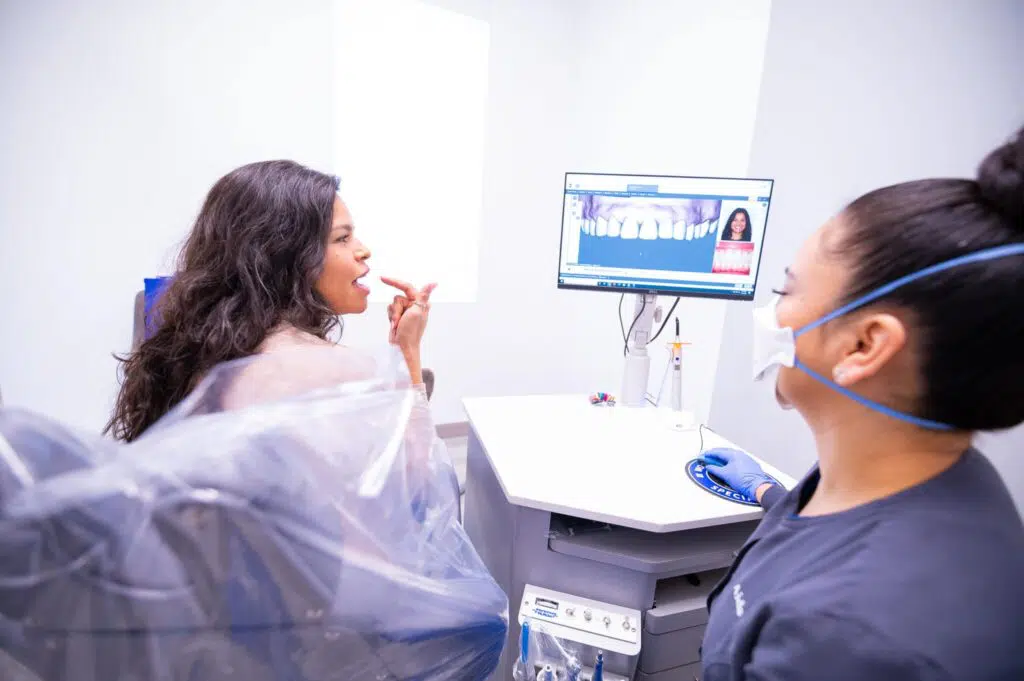

There may be slight shifting after orthodontic treatment that’s perfectly normal. If you’re concerned, it’s OK to call us and ask. We’d rather you call us right away than wait until it’s too late to stop the damage. The sooner we can fix things, the less damage there will be.
What’s normal?
What’s worth calling about?
Children evaluated to be good candidates for two-phase orthodontic treatment can start as early as 9-10 years of age. We use orthodontic appliances to prepare their mouths for braces or clear aligners later, usually around ages 11-13.
It's very rare for a child to get braces the first day. There needs to be extenuating circumstances. Most of the time, we schedule braces for later.
Placing braces usually takes 1-2 hours. We clean the teeth, place the brackets, ensure the bonding agent dries and adheres properly, and then attach the archwire. We'll also talk to your child about caring for their braces, including what they can and cannot eat, how best to clean them, and other things they need to know for successful treatment.
Yes, because looks can be deceiving, and your child's teeth may not be as straight as you think. You need a professional orthodontist to properly evaluate their teeth.
Just because teeth aren't crooked doesn't mean they don't need orthodontic treatment. There may be more than you aren't seeing, which is why your child needs an orthodontic evaluation. Your pediatric dentist may recommend that your child see an orthodontist, too, if they spot potential problems.
Woodhill Dental Specialties offers both pediatric dentistry and orthodontics so that your child can feel comfortable with their oral health treatment throughout their childhood. Schedule an appointment with us if you need orthodontic or pediatric dental care in Dallas, TX, or Rockwall, TX.
 This site’s strategy, design, photo & video were created by the marginally-above-average folks @ Clear Partnering Group.